Choosing the right portable generator depends entirely on your specific energy needs, whether you are looking to power an entire household during a blackout or simply keep essential devices running while camping.
Modern options range from massive tri-fuel units that hook directly into natural gas lines to compact battery-powered stations that can be safely used indoors. Understanding the balance between raw power output, fuel flexibility, and the sensitivity of your electronics is the first step in selecting a reliable backup system
| Product | Fuel Type | Runtime (50% Load) | Price (US$) |
|---|---|---|---|
| Anker SOLIX C2000 | Battery / Solar / Car / Gas | ~1.6 Hours (at 528W output) | $799.00 – $1399 |
| Westinghouse WGen9500DF | Dual-Fuel (Gas, Propane) | 8 Hours (Gasoline) | $999.00 |
| Oxseryn 4500W | Gasoline | ~8.5 Hours** | $269 |
What’s Your Backup Requirement?
Before choosing a backup generator for home or camping, or your workplace, you should be sure about what is your requirement. While picking a high-output backup generator that delivers 9000 to 12000 watts of power is perfect for even big households. An informed decision will help you save significant money in upfront and fuel costs.
Generators with outputs up to 12000 watts are powerful enough to start and run heavy-duty motors for central air conditioning, well pumps, and large kitchen appliances simultaneously.
What to look for in a backup power generator?
Here are a few things you must look for when choosing a backup generator for home.
Fuel Versatility: Dual and tri-fuel models allow you to switch between gasoline, propane, and natural gas, which is vital when local gas stations are closed. Some models like the Anker portable generator allow you to charge with solar panels, or even your car alternator or internal charging port.
Safety and Connection: Models in this category often feature built-in Carbon Monoxide (CO) sensors and 50A outlets, making them ready to plug directly into a home manual transfer switch
Low Harmonic Distortion: Inverter technology ensures a stable “pure sine wave” with less than 3% Total Harmonic Distortion (THD), providing utility-grade power for your most expensive tech.
Silent and Sustainable: Battery-powered stations offer an indoor-safe alternative with zero emissions and near-silent operation, though they generally provide shorter runtime than fuel-based counterparts.
Fast Starting: Look for features like remote key fobs or push-button electric starts to eliminate the physical strain of a recoil pull-start.
Efficient Operation: Many portable units include an “Eco-Mode” that adjusts engine speed to match your current power draw, extending fuel life and reducing noise during low-usage periods.
How to estimate your backup power requirement?
Estimating your power requirement is very simple. Here’s a simple calculation you can do to find out how much power you need.
1 electrical unit is called 1 kilowatt hour (KWh) which equals 1000 Watts.
If your window Air Conditioner unit consumes 800 Watts, it means it uses 0.8 KWh per hour or 0.8 units per hour.
Now let’s say you have two window AC units (800W each), two television units (100W each) two LED light bulbs (25W each) and you run them continuously for an hour through a 120V house supply.
So your total power consumption for the hour would be:
AC Units – 800×2 = 1600W. Televisions – 100×2 = 200W, and LED Bulbs – 25×2 = 50W.
Total Power Consumption = 1600 + 200 + 50 = 1850Watts or 1.8 units of electricity per hour.
Now, a generator with an maximum output of 2000 Watts can deliver this much electricity at its peak load (operating capacity). Similarly, a generator with a 4000 Watts output can deliver this much electricity at its 50% capacity, hence leaving more remaining power output to use other appliances simultaneously.
Running generators at 25% or 50% capacity is beneficial as it saves fuel costs and provides longer runtime.
Diesel vs Gasoline Backup Power Generator
A diesel backup generator for home is higher in price but offers better fuel efficiency. Almost half that of a gasoline generator. Plus, they also have a lower maintenance cost. However, diesel generators are more suitable for bigger loads and longer runtime.
Gasoline backup generators are comparatively lower in price, but offer lesser fuel economy. However, they are comparatively silent and lighter in weight.
Best Portable Generators for Home Review
Here’s a meticulously selected list of the best portable generators for home in the united states. These generators have exceptionally positive customer feedback and will help you with higher power loads. While providing low maintenance cost and good features.
Anker SOLIX C2000 Solar Option Generator
Price: $799 – $1399
The Anker SOLIX C1000 is a versatile, mid-sized portable power station designed to bridge the gap between outdoor portability and home emergency backup.
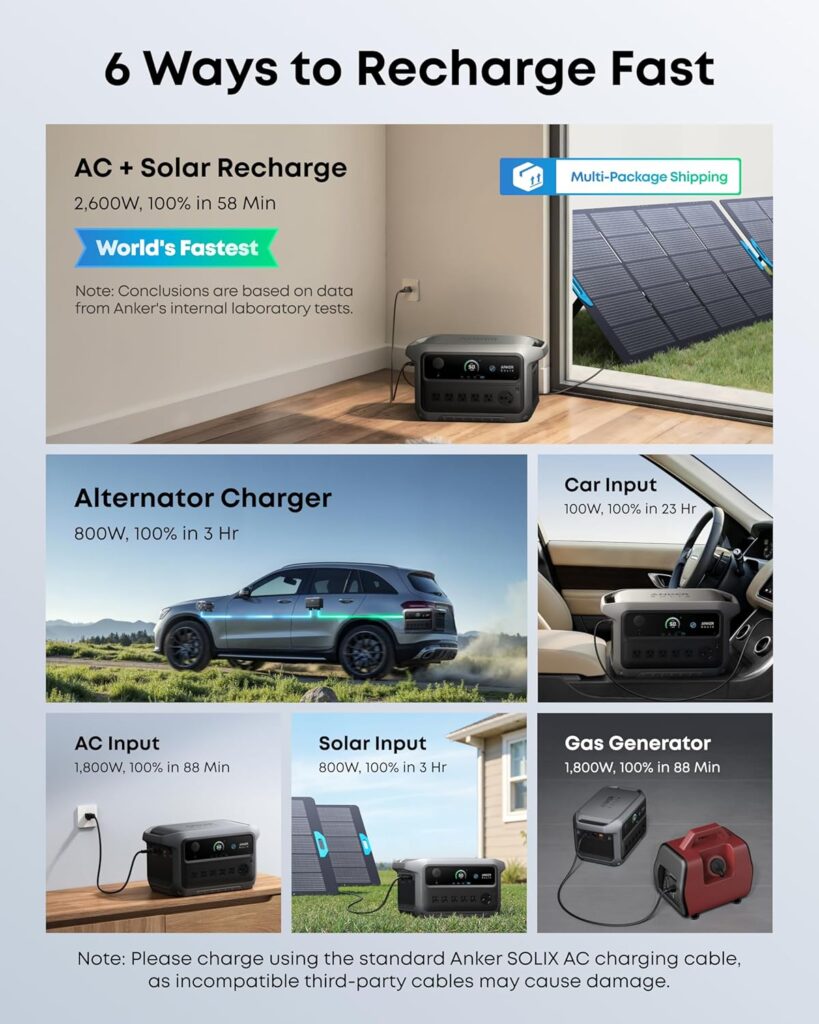
Featuring a 1056Wh LiFePO4 battery and an 1800W pure sine wave inverter, it is capable of powering approximately 99% of common household appliances, from refrigerators and coffee makers to sensitive medical devices like CPAP machines. Its design emphasizes longevity and speed, utilizing Anker’s InfiniPower technology to offer a 10-year lifespan and “HyperFlash” recharging that can replenish the battery to 100% in under an hour.
With a compact, flat-top design that is roughly 15% smaller than the industry average for its capacity, it serves as a highly efficient tool for campers, RV enthusiasts, and homeowners seeking reliable backup power.
- SurgePad Technology: Allows the unit to drive high-wattage appliances up to 2400W without overloading the inverter.
- LiFePO4 Chemistry: Uses EV-grade batteries designed for safety and a long cycle life.
- Compact Flat-Top Design: Optimized for stacking gear or easy storage in tight spaces.
- Fast Solar Input: Supports up to 800W of solar charging to stay powered while off-grid.
- Multiple Charge Options: Charge via solar, AC outlet, car alternator, car input, gas charger.
| Pros | Cons |
|---|---|
| Ultra-Fast Recharging. Full charge in 58 minutes | Fan Noise Under Full Load |
| Long-Lasting Battery Life. 80% capacity after 3,000 charge cycles | Slightly budget heavy for accessories |
| Reliable UPS Functionality. Switchover time of less than 20ms | |
| Expandable Power Capacity. can be doubled to 4000Wh | |
| Smart App Integration. Multiple functions. Good Warranty |
Westinghouse 12500 Watt Dual Fuel Backup Generator
Price: $999
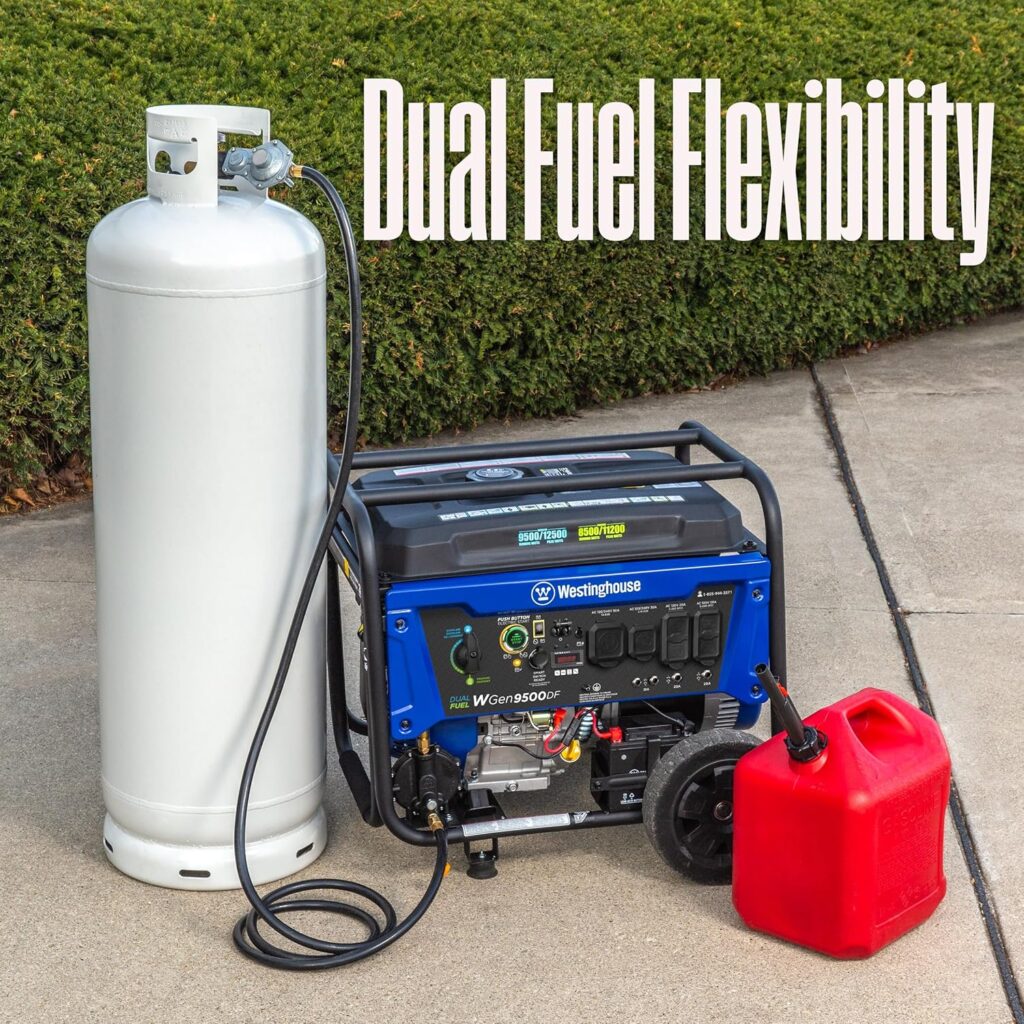
The Westinghouse WGen9500DF is a high-output power solution designed for homeowners who require substantial backup energy with the added flexibility of multiple fuel sources.
This dual-fuel unit allows for a seamless transition between gasoline and propane, providing a versatile safety net for extended power outages or remote worksites.
Powered by a heavy-duty 457cc 4-stroke OHV engine with a durable cast iron sleeve, it is engineered to handle high-demand appliances—such as central air conditioning units, well pumps, and large refrigerators—simultaneously.
Its robust construction and high peak wattage make it a reliable cornerstone for a comprehensive home emergency preparedness plan.
- Dual-Fuel Selection: Features a simple fuel selector switch on the control panel to toggle between gasoline and propane (LPG).
- Remote Start Fob: Includes a wireless remote key fob for convenient starting from a distance, alongside a push-button electric start.
- Transfer Switch Ready: Equipped with a 14-50R 50A outlet and an L14-30R 30A twist-lock outlet for easy connection to a home manual transfer switch.
- VFT Data Center: A digital display that tracks Volts, Frequency, and Lifetime Hours to simplify maintenance scheduling.
| Pros | Cons |
|---|---|
| Exceptional Power Capacity: Delivers 12,500 peak watts and 9,500 running watts | Significant Noise Level: Operating at approximately 74 dBA, this unit is needs some distance |
| Fuel Versatility: Propane compatibility offers a cleaner-burning alternative | Weight and Bulk: Weighing approximately 211 lbs. |
| Automatic Low-Oil Shutdown: Protects the engine from permanent damage | Open-Frame THD: As a standard portable generator, it produces a higher Total Harmonic Distortion (THD) than inverter models. should be used with a quality surge protector. |
| Comprehensive Accessory Kit: Includes multiple items for use | Propane Power Drop: Like all dual-fuel units, there is a slight reduction in output when running on propane |
| Solid Runtime: Features a large 6.6-gallon gasoline tank that provides up to 12 hours of continuous operation at 25% load. |
Oxseryn 4500W Portable Inverter Generator Review
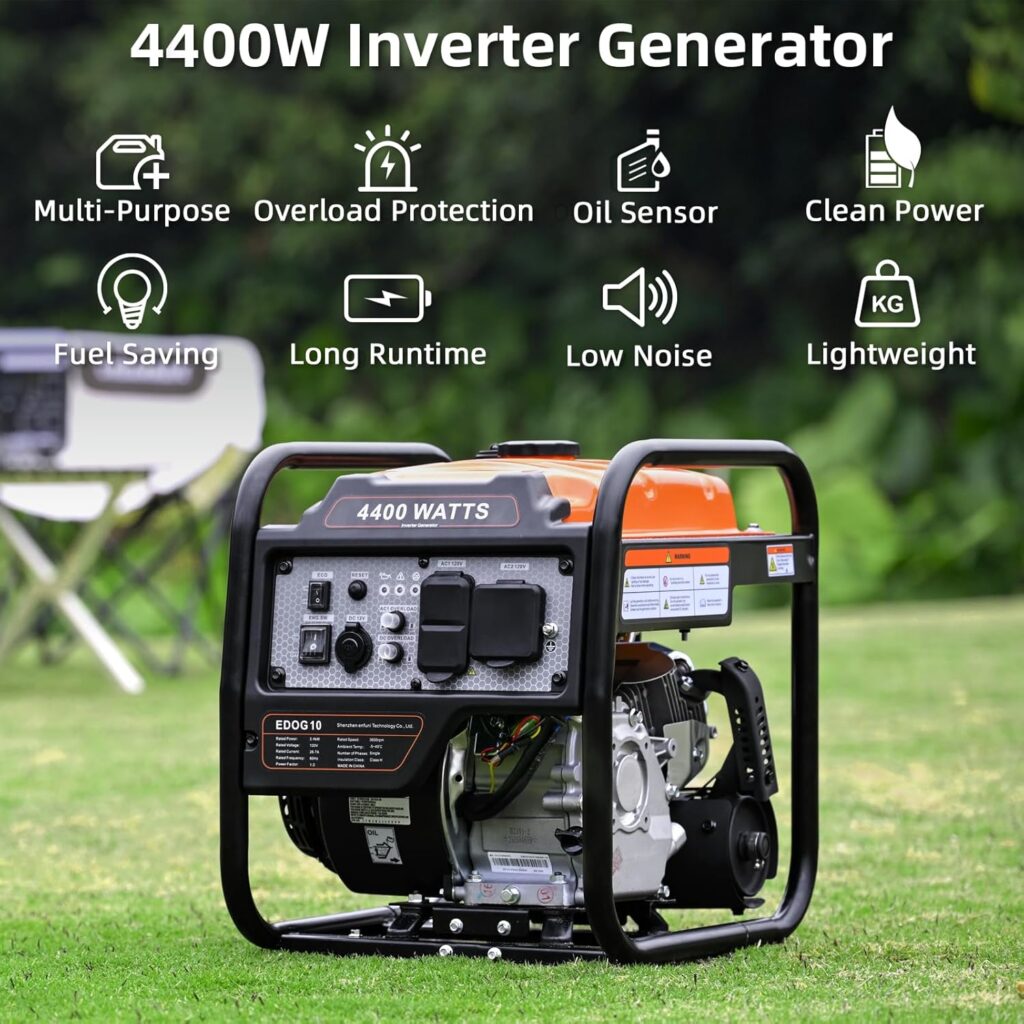
The Oxseryn 4500W is a versatile and compact portable inverter generator designed for users who need a balance between high power output and quiet, clean energy.
Utilizing advanced inverter technology, this portable generator for home provides steady, stable power with less than 3% Total Harmonic Distortion (THD), making it safe for sensitive electronics like laptops, smartphones, and tablets.
Its lightweight design—roughly 40% lighter than traditional open-frame generators—combined with a telescoping handle and heavy-duty wheels makes it an ideal companion for RV trips, camping, and tailgating.
Powered by a fuel-efficient 223cc 4-stroke engine, it offers significant run times on a single tank, ensuring reliable performance for both recreational use and emergency home backup.
- Pure Sine Wave Technology: Produces clean power with <3% THD to protect sensitive micro-circuitry in modern devices.
- Eco-Mode Toggle: Automatically adjusts engine speed to match the electrical load, saving fuel and reducing noise levels.
- Parallel Ready: Allows you to connect two units together to double your power output for heavy-duty RV air conditioners.
- LED Data Center: Provides real-time information on fuel levels, current wattage output, and remaining run time.
| Pros | Cons |
|---|---|
| Exceptional Portability and Weight: Lightweight and easy to move around. | Limited Heavy-Duty Power: While excellent for RVs, 4500 peak watts may not be enough to run a whole-house HVAC system |
| Safe for Electronics: The high-quality inverter output ensures your expensive tech won’t be damaged by power surges or “dirty” electricity. | Gasoline Only: Unlike tri-fuel models, this unit relies strictly on gasoline. |
| Ultra-Quiet Operation: Runs significantly quieter than standard generators. | Open-Frame THD: As a standard portable generator, it produces a higher Total Harmonic Distortion (THD) than inverter models. should be used with a quality surge protector. |
| User-Friendly Starting: Comes equipped with multiple starting options | Propane Power Drop: Like all dual-fuel units, there is a slight reduction in output when running on propane |
| Fuel Efficiency: Can operate for up to 10-12 hours on a small tank of gasoline at a 25% load |
Conclusion for the best portable generator for home
Portable backup power generators are an essential in today’s time. With growing risks of natural disasters like wildfires, natural calamities, and other potential threats, having such a power source gives you peace of mind. The best portable generator for home keeps you prepared for any emergency that may comes across your way. Given their affordability, it is too low of a price to pay for your safety.